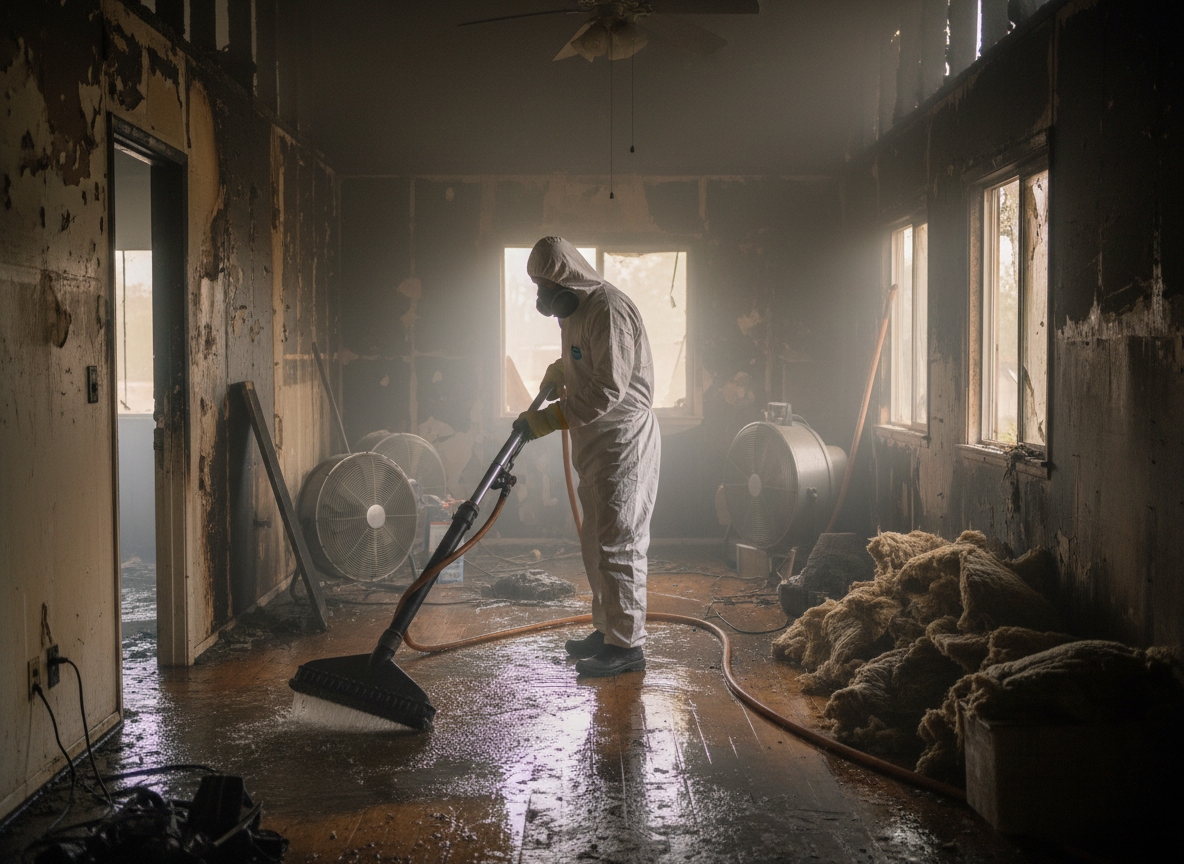
Sunland homes built decades ago in Sunland Village and along Foothill Trails often feature lath-and-plaster walls and older electrical systems that trap water from fire suppression efforts. Mediterranean climate summers bring low humidity that can mask lingering moisture until mold appears weeks later. Crews must pull baseboards and check under hardwood floors common in these neighborhoods because water migrates along the slope toward Sunland Park.
Foam and chemical retardants used by Los Angeles County crews near Angeles National Forest trailheads leave corrosive residues on concrete slabs and metal HVAC components. Technicians test pH levels on drywall and wood framing before deciding what can be saved. In Sylmar and Tujunga border areas, older crawl spaces fill quickly during winter rains that follow dry-season fires, requiring extraction before structural members weaken.
Portable moisture meters and thermal imaging locate pockets behind cabinets and in attic insulation that homeowners miss. Negative air machines with HEPA filtration capture soot particles that otherwise settle into carpet fibers and window tracks throughout the house. Final clearance includes checking humidity levels to confirm the structure has returned to pre-loss conditions before any reconstruction begins.
Technician insight
In Sunland the thing that catches most people out with water damage remediation after fire is how quickly moisture travels downhill through the older stucco homes along Foothill Trails. Summer heat dries the surface fast but leaves water trapped behind plaster in Sunland Village houses, and if you do not open those cavities before the first winter rain the rot starts in the sill plates.
Fire Runoff in Foothill Trails Home
A hillside property near Angeles National Forest trailheads received heavy water from suppression efforts during a summer brush fire. Inspection found water had followed the slope under the living room slab and into the garage. Extraction and targeted drying prevented mold growth in the older framing, allowing the owners to return after three weeks.
How it works
- 1
Initial Assessment
Technicians inspect the property for water intrusion points, soot deposits, and hidden moisture using meters and thermal cameras.
- 2
Containment and Extraction
Plastic barriers isolate affected rooms while pumps and vacuums remove standing water from floors and wall cavities.
- 3
Cleaning and Odor Removal
HEPA air scrubbers and specialized cleaners neutralize smoke residue on surfaces and in HVAC systems.
- 4
Drying and Monitoring
Industrial dehumidifiers and air movers dry the structure while daily moisture readings track progress until levels stabilize.
Pricing
Cost depends on square footage affected, depth of water penetration, and whether hidden cavities require opening walls or ceilings.