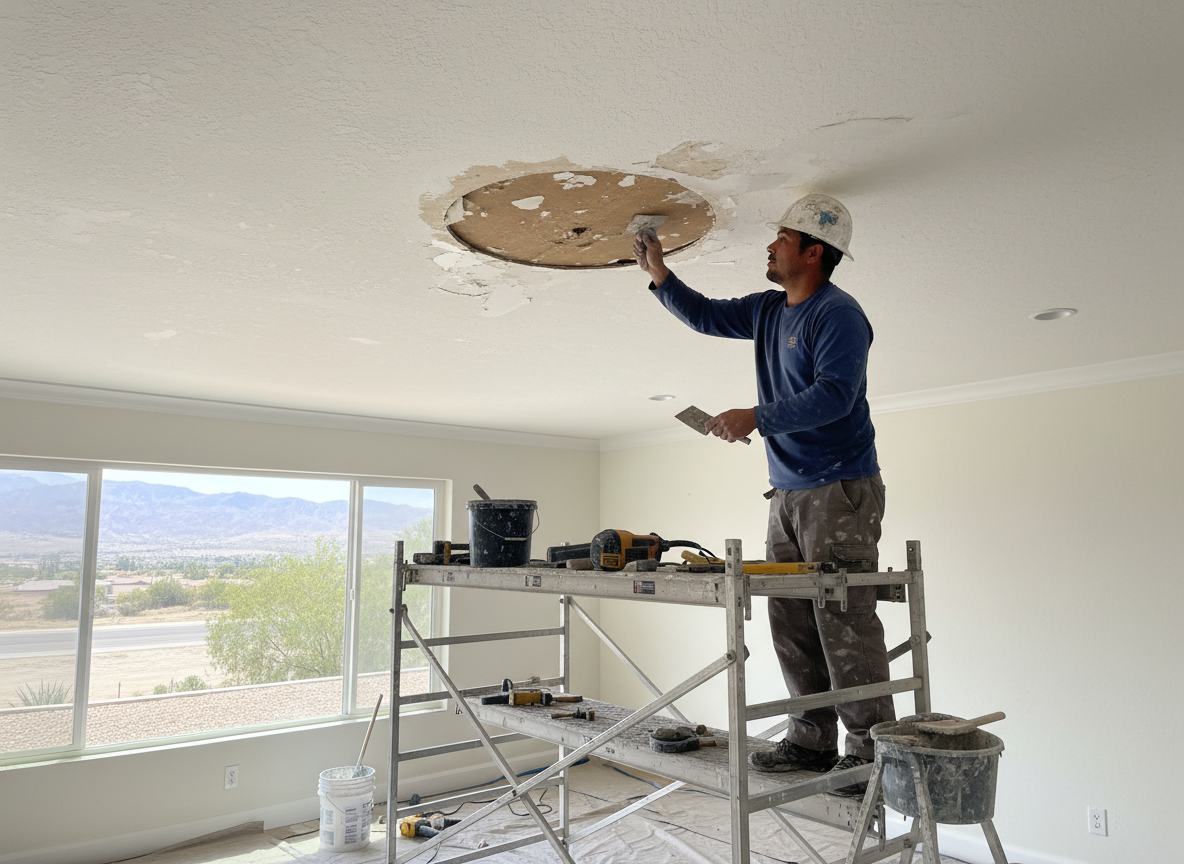
Sunland homes in Sunland Village and Foothill Trails often feature plaster or lathe ceilings installed decades ago that hide slow leaks from winter rains. Mediterranean climate patterns bring concentrated moisture in mild winters while hot dry summers mask the problem until staining or sagging appears. Technicians at 8337 Foothill Blvd map moisture with infrared tools to locate the full extent before cutting, because partial repairs in Los Angeles County properties frequently fail when water has traveled along joists toward Angeles National Forest trailhead slopes.
Access challenges arise in single-story ranch homes common near Sunland Park where attic insulation and electrical runs sit directly above living spaces. Removing sections without disturbing knob-and-tube wiring or disturbing neighboring Tujunga and Sylmar properties requires careful containment. Drying protocols must account for the area's low humidity summers that speed surface drying yet leave deeper joist saturation if dehumidifiers are not run long enough after the initial extraction.
Edge cases include ceiling repairs after pipe bursts in multi-unit buildings along Foothill Blvd where shared walls allow water to migrate between units. Code requirements in Los Angeles County call for permits when structural members are exposed, and skipping inspection steps risks future insurance denials. Final matching of textured ceilings demands on-site mixing to blend with original finishes rather than relying on pre-mixed compounds that show under the strong afternoon sun typical here.
Technician insight
In Sunland the thing that catches most people out with Ceiling water damage repair is how winter rain funnels down the Angeles National Forest slopes and sits in the low spots of older plaster ceilings in Sunland Village homes long after the storm passes, so the visible stain is rarely the full story.
Hidden Leak Behind Plaster in Sunland Village
A homeowner noticed a small brown spot after a January rain. Inspection revealed water had traveled along ceiling joists from a roof valley near Foothill Trails. The crew removed a four-foot section, dried the cavity for three days, replaced the plaster, and matched the original texture so the repair disappeared under normal lighting.
How it works
- 1
Source Identification
Inspect roof, plumbing, and HVAC lines above the ceiling using moisture meters and thermal imaging to pinpoint the leak origin.
- 2
Containment and Drying
Isolate the affected area, extract standing water, and deploy air movers plus dehumidifiers sized for the home's construction type.
- 3
Ceiling Removal and Assessment
Cut out damaged sections, inspect joists and insulation, and document conditions for any required Los Angeles County permits.
- 4
Repair and Finish
Install new drywall or plaster, match existing texture, and apply paint to restore the ceiling surface.
Pricing
Cost depends on square footage affected, depth of saturation, and whether permits or electrical work are required.