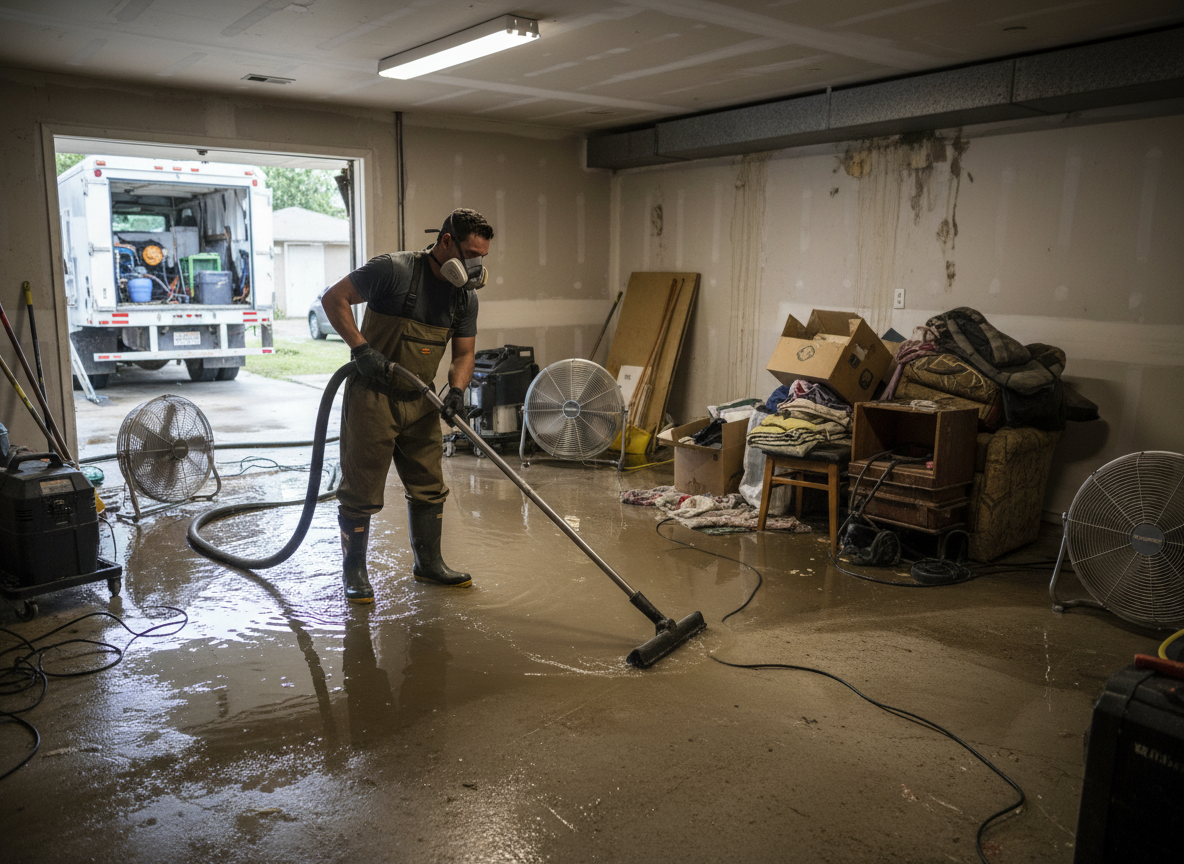
Sunland sits at the edge of the Angeles National Forest with many homes in Sunland Village and Foothill Trails built on slopes where winter rains send water down from trailheads straight toward foundations. Older single-story and split-level houses common here often have partial basements or below-grade storage that collect water when drainage ditches fill or French drains clog with silt from dry summer months. We extract standing water first, then use moisture meters on concrete slabs and wood framing to locate hidden saturation that can lead to mold within 48 hours in the mild winter humidity.
Flash runoff after a hot dry summer is the main trigger we see in Los Angeles County properties near Sylmar and Tujunga. Water enters through unsealed sill plates or cracked stem walls rather than obvious window leaks, so we pull baseboards early and check behind cabinets where moisture travels along the footing. We document every step for insurance adjusters while separating salvageable contents from porous materials that must be discarded to meet current Los Angeles County health guidelines on post-flood remediation.
Terrain matters here. Homes backing up to Sunland Park or lower foothill trails deal with sheet flow that bypasses standard yard grading installed decades ago. We bring portable generators and truck-mounted extractors because power often fails during the first heavy rain of the season, and we stage drying equipment to account for the thicker stucco walls typical in 1950s-1970s Sunland construction that hold moisture longer than newer drywall.
Technician insight
In Sunland, the thing that catches most people out with Basement flood cleanup is how quickly water from Angeles National Forest slopes saturates the older concrete footings in Sunland Village homes after the first winter rain following a dry summer. Homeowners often focus on the visible puddle and miss the moisture that has already wicked up into the sill plates.
Foothill Trails runoff into 1960s basement
Heavy rain sent sheet flow from nearby trailheads into a Foothill Trails home's below-grade storage room. We found water had traveled under the slab and into the adjacent laundry area. Extraction and targeted drying prevented mold growth in the older framing while preserving the homeowner's stored tools and holiday decorations.
How it works
- 1
Arrival and Safety Assessment
We arrive within the hour, shut off power to affected circuits, and check for gas or structural concerns before entering the basement.
- 2
Water Extraction
Standing water is removed with submersible pumps and truck-mounted units to prevent further migration into adjacent rooms or crawlspaces.
- 3
Moisture Mapping and Removal
Infrared cameras and meters locate hidden water in walls, floors, and insulation so we can remove only the damaged materials.
- 4
Drying and Monitoring
Air movers and dehumidifiers run until readings return to normal, with daily checks logged for your records.
- 5
Final Sanitation
Antimicrobial treatment is applied to remaining surfaces once drying is complete.
Pricing
Upfront quotes based on water volume, affected square footage, and materials involved; no hidden fees.