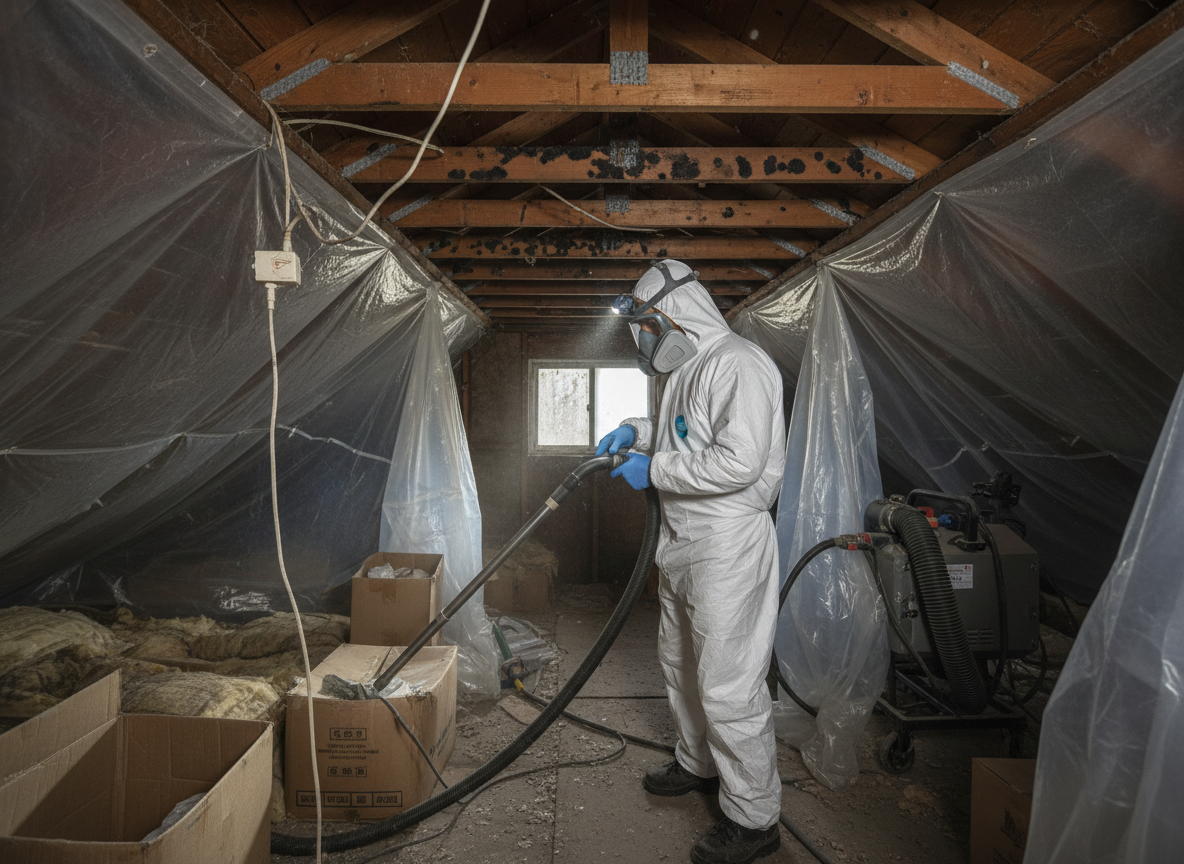
Attic mold in Sunland often starts from roof leaks or condensation in homes built before the 1970s, especially those in Sunland Village with original wood framing and limited insulation. The Mediterranean climate brings hot dry summers that hide slow leaks until mild winter rains push moisture into rafters, allowing black mold to spread along the underside of shingles near Angeles National Forest trailheads. Technicians must pull back insulation carefully to avoid disturbing spores that can drift down into living spaces through unsealed ceiling penetrations common in these foothill properties.
Access in Foothill Trails homes frequently involves navigating steep rooflines and tight crawl spaces where previous DIY fixes have left hidden pockets of growth behind HVAC ducts. Removing contaminated batts requires full containment with negative air machines to prevent cross-contamination into adjacent bedrooms, and all affected wood must be treated with EPA-registered antimicrobials before new insulation is installed. Los Angeles County building codes require proper venting upgrades during remediation to meet current R-value standards, or future condensation will restart the cycle within one or two seasons.
Homeowners in Sylmar and Tujunga often discover the issue only after noticing ceiling stains or allergy spikes, by which point the mold has usually colonized the entire attic deck. Proper remediation includes locating the moisture source—frequently cracked flashing around skylights or exhaust vents—before any cleaning begins, because treating symptoms without fixing the leak guarantees recurrence during the next winter rain event.
Technician insight
In Sunland, the thing that catches most people out with attic mold remediation is how the dry summers mask slow roof leaks until winter rains hit the older unvented attics in Sunland Village homes, letting mold colonize the entire deck before anyone smells it.
Hidden growth after winter rains in Sunland Village
A homeowner in Sunland Village reported musty odors after seasonal rains. Inspection revealed mold along rafters from a small flashing leak near the original roofline. Contaminated insulation was removed, wood treated, and additional ridge venting installed to match the home's age and climate exposure. The attic tested clear with no recurrence during the following mild winter.
How it works
- 1
Initial Assessment
Technicians arrive 24/7 from the Foothill Blvd location and inspect the attic for visible growth, moisture readings, and entry points tied to roof leaks common in Sunland Village homes.
- 2
Containment Setup
Plastic barriers and negative air machines isolate the attic to keep spores from migrating into living areas of older Foothill Trails properties.
- 3
Removal and Treatment
Contaminated insulation is removed, wood surfaces are cleaned and treated, and the original moisture source such as damaged flashing is identified and documented.
- 4
Ventilation Correction
Additional soffit or ridge vents are added where needed to reduce future condensation risk in the dry summer months typical of Los Angeles County foothills.
- 5
Final Clearance
Post-treatment air sampling confirms spore levels have returned to normal before insulation replacement and job sign-off.
Pricing
Pricing varies by attic size, extent of growth, and whether roof repairs are needed before insulation replacement.